



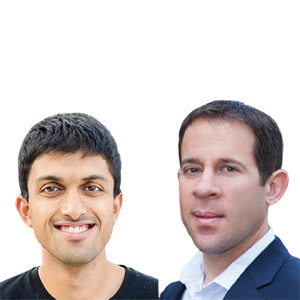
 Ashu Singhal, Co-Founder and Michael Schwartz, Head of Product Marketing
To this end, Benching provides a cloud-based bioinformatics solution that enables scientists to accelerate the speed of their research and development. The Life Sciences R&D Cloud is a unified suite of applications to design, run, and analyze experiments that captures the end-to-end traceability required in biotechnology applications. In an interview with CIO Applications, Ashu Singhal, Co- Founder, and Michael Schwartz, Head of Product Marketing at Benchling, share their insights on how the Life Sciences R&D Cloud empowers researchers and makes R&D faster and more collaborative.
Could you shed light on the background of the company?
Ashu: In 2012, a team of MIT biology researchers and computer scientists came together to lay the foundation of Benchling. We had all spent time as bench scientists and knew firsthand how the outdated software tools that researchers had to use were hindering collaboration and slowing down research. We started Benchling to accelerate R&D by building a software platform that reflected how scientists actually work, and with a user experience that was as easy to operate as modern consumer software. Since those early days, we’ve built a complete platform for life sciences R&D used by more than 300 companies and over 200,000 academic research scientists across the world.
Our solution now includes applications for experiment documentation, molecular biology design, registration and inventory tracking, process management, lab automation, and data analysis. One key differentiator is that all of these applications are built on a common platform and data model. So for example, a scientist who designs a novel DNA sequence in the molecular biology suite can easily add this to a lab notebook entry simply by “@” mentioning it, and can then add it to their institution’s registry and freezer locations all from the same software interface. This saves considerable amounts of time by reducing the effort users exert searching for and manually transferring data across disparate systems. Importantly, it brings the entire lineage of data into a common, structured environment where it can be queried for insights at any step in the process. This helps scientists and team leaders make efficient, data-driven decisions to advance their programs forward. The underlying data model is easily configurable without code, so this has really helped our customers get up and running quickly. We’ve been able to stay agile and support new modalities as the industry continues to innovate.
What are the challenges that your clients face with biotechnology, and how do you help them overcome those?
Michael: In the biotechnology space, our clients are working at a blistering pace to get the next generation of drug candidates into clinical evaluation. There are powerful new tools like next-generation sequencing, lab automation, and high throughput screening that have led to an explosion of data. Most of this data goes unanalyzed because it lacks the requisite structure and context. For example, not having the ability to link protein production to the underlying cell lines and plasmids used in the process can hinder scientific decision making and parameter optimization.
These challenges are only exacerbated by the rapidly evolving nature of biotechnology. A new generation of therapeutic modalities has emerged, including cell and gene therapies, bi-specific antibodies, and antibody-drug conjugates. These modalities will also at some point be replaced by a future generation of approaches developed by our clients. Benchling was designed to accommodate these varying approaches and evolve with our customers’ needs.
Ashu: Building on what Michael said, the legacy software that scientists previously had to use is inherently rigid. Many of these systems were built for chemistry-based research and simply cannot accommodate the innate complexity of biologics. Others are still mostly deployed as on-premise applications that lack the continual innovation we can offer as a unified cloud service. Our approach makes a difference here.
Could you elaborate on the solution and the products that you deliver?
Michael: From day one, Benchling has been focused on enhancing the user experience by reducing the amount of manual work required by scientists and by providing a consumer-grade interface that is easy to learn and operate. R&D teams want to collaborate more and work better across highly specialized teams. Benchling promotes these interactions by providing permission-controlled visibility to data and by orchestrating cross-team requests and workflows. Many of our customers had been using spreadsheets, email, or point solutions to initiate these kinds of processes. That leads to long chains of inefficient communication and error-prone hand-offs. With Benchling’s process management solutions, the requests are accompanied by a complete set of underlying parameters. For example, a request that goes to a cell line engineering team would include the plasmid sequence, method of production requested, and even the precise location of reagents in the freezer.
We offer various application configurations that can meet the needs of any kind of organization, from startups to the largest global biotech and pharma companies. Our Professional Services team really takes the time to understand our clients’ research. They deliver a data model and schema that reflects their workflows and builds in any other logic that applies to their company, including computed fields, validation rules, and naming conventions.

Ashu: Our customers, as in many other industries, are seeking to become more data-driven organizations. They want to leverage the power of data science and machine learning to increase their prowess and decision-making abilities. Even if CIOs invest in machine learning and scientific analytics, they still need a centralized repository for data. This is where we fit in by providing a unified platform that captures and structures data in a way that is primed for automated analysis.
As CIOs continue to drive digital transformations in their organizations, we often get asked about the security and architecture of the platform. Since our platform is cloud-native, it has the highest level of security, access, provisioning, and permissions. Another top concern we hear from CIOs is the need to ensure that all applications maintain some degree of interoperability with each other as needed. Benchling has a set of REST APIs that allows for flexible integrations with R&D software and databases, as well as a set of out-of-the-box integrations for laboratory automation. Our goal has been to make Benchling a complete solution for R&D, while still capable of fitting in with a complete digital strategy that many modern organizations are pursuing.
By standardizing and centralizing all R&D data on one flexible, cloud-based platform, we are accelerating the pace of life science and enabling better and faster decision-making. We’re building solutions that are intuitive, collaborative, and aligned with the digital strategies that forward-looking companies are pursuing
Could you share a customer success story?
Ashu: Our customers tend to realize value in their software investments when they can deliver gains in productivity, get teams working together more efficiently, and have users adopt the system at a level where it becomes a central source of truth. For example, we helped a public biotechnology company based in San Diego update their informatics ecosystem. The company is developing RNA medicines with a proprietary delivery platform. They had previously relied on a legacy electronic lab notebook system that had very low adoption in the 20-30% range.
When Benchling was deployed, their scientists were able to collaborate more efficiently and harmonize their lab protocols directly in the system. They could access and search the protocol library and leverage the molecular biology suite to design their sequences right in the context of their work. This led their user adoption to increase beyond 90%. They also used to spend considerable amounts of time away from the bench to update their lab notebooks or search for older data. Now, with Benchling, they are getting 30% of their time back each day to focus on their science versus administrative work.
What does the roadmap look like for the Benchling?
Michael: Every application in Benchling has its own continual roadmap. We are continually deploying features in each of our core offerings: Notebook, Molecular Biology, Registry, Inventory, Requests, Workflows, and Insights, as well as our foundational platform. This is an advantage of being deployed through a Software as a Service (SaaS) model, but also a testament to our product, engineering, and customer experience teams. They work closely with our customers to get detailed feedback from each and every implementation. This guides our future product roadmap, along with our desire to support a wider range of applications in the industries we focus on. Ultimately, our goal is to be an accelerant to the incredible work our customers do each day, and that requires a long-term commitment to product innovation.
