



The human amniotic membrane is the innermost layer of the placenta that protects the developing fetus, playing a vital role during pregnancy. Research confirms this biologically rich tissue holds remarkable therapeutic potential well beyond gestation. Packed with collagen, antimicrobial peptides, anti-inflammatory cytokines and essential growth factors such as EGF and TGF-β, the membrane actively supports epithelial healing, calms inflammation and delivers measurable improvements in wound care and ocular surface repair.
Axolotl Biologix is at the forefront of translating this scientific promise into clinical impact.
By developing targeted biologic therapies derived from amniotic tissue, it is redefining how complex wounds and soft tissue injuries are treated. What was once discarded as medical waste is now being transformed into a powerful tool for regenerative healing.
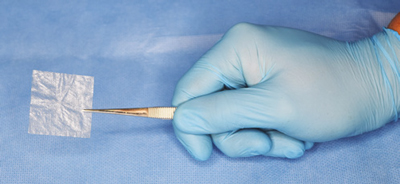 Its flagship allografts, Axolotl Graft™ and Axolotl DualGraft™, embody this innovative solution. Purpose-built to leverage the natural regenerative properties of the human amniotic membrane, the advanced biologics create a three-dimensional, extracellular matrix that covers and shields the wound, reinforces structural support and delivers key biological cues that accelerate granulation tissue formation and encourage scar-minimizing regeneration.
“Our mission is to activate the body’s intrinsic repair mechanisms and improve the likelihood of functional recovery, especially where traditional interventions have failed,” says Josh Sandberg, CEO.
Physician insights inform every stage of product development, from the most common wound dimensions to the anatomical barriers that challenge conventional approaches. Feedback drives ongoing refinement, ensuring each outcome aligns with evolving standards of care and addresses real-world wound-healing needs.
In one case, a physician in New Jersey was treating a patient with a chronic wound that had remained open for over a decade following electrical trauma. The tissue was biologically inactive and prone to infection. Amputation was being considered. Though initially skeptical of amniotic-based therapies, the physician agreed to trial Axolotl’s graft. Within weeks, the wound showed signs of vascularization, epithelial migration and tissue remodeling.
“Axolotl’s amniotic-based products support the body’s natural healing response by providing a biologically structured matrix that allows the tissue to enhance cellular migration, vascularization and tissue remodeling. These properties make them valuable adjuncts in the management of complex clinical wounds, such as this electrocution patient,” says Dr. Aaron J. Tabor, chief science officer at Axolotl Biologix.
For the first time in years, closure was within reach and the risk of limb loss was eliminated.
The Science Behind the Healing
The resulting graft retains its native collagen framework and remains rich in essential bioactive signals, each with a defined role in the wound healing cascade. Epidermal growth factor (EGF) stimulates keratinocyte and fibroblast proliferation to accelerate tissue regeneration. Transforming growth factor beta (TGF-β) modulates inflammation and promotes orderly extracellular matrix remodeling. Vascular endothelial growth factor (VEGF) initiates angiogenesis, forming the vascular networks critical for sustained oxygenation and nutrient delivery.
Axolotl Biologix sources its amniotic membrane from healthy, consenting mothers following both cesarean and vaginal deliveries, under protocols that meet the highest ethical and medical standards, including compliance with FDA and American Association of Tissue Banks (AATB) guidelines. Once recovered, the tissue is carefully separated by minimal manipulation from the placenta, preserving the biological architecture that protected and nourished life in utero.
-
Our mission is to activate the body’s intrinsic repair mechanisms and improve the likelihood of functional recovery, especially where traditional interventions have failed.
The resulting graft retains its native collagen framework and remains rich in essential bioactive signals, each with a defined role in the wound healing cascade. Epidermal growth factor (EGF) stimulates keratinocyte and fibroblast proliferation to accelerate tissue regeneration. Transforming growth factor beta (TGF-β) modulates inflammation and promotes orderly extracellular matrix remodeling. Vascular endothelial growth factor (VEGF) initiates angiogenesis, forming the vascular networks critical for sustained oxygenation and nutrient delivery.
Together, these molecular signals orchestrate healing. They awaken stalled cellular responses, guide structured tissue formation and establish a microenvironment that favors regeneration over fibrosis. And because the graft is shelf-stable, non-immunogenic and orientation-neutral, it can be applied confidently in surgical and outpatient settings, allowing biologic engagement upon contact.
Ease of use allows for streamlined application, reducing procedural time, supporting faster epithelial closure and minimizing downstream complications like infection, hypertrophic scarring or recurrence. For patients, this means fewer dressing changes, less procedural discomfort and a path toward restored function.
Building on Evidence
Axolotl Biologix is currently enrolling patients in a randomized clinical trial to evaluate its biologic therapies for chronic wounds, including diabetic foot ulcers. The objective is to validate product performance in high-risk wound scenarios, as well as establish a robust platform of evidence that can guide therapeutic decision-making across a range of clinical settings.
The trial marks the first phase of a broader research initiative to expand into complex pathologies, such as venous leg ulcers and pressure injuries, where durable solutions remain elusive. The goal is to help clinicians move beyond anecdotal care into evidence-driven protocols that improve outcomes and confidence.
“This industry has, at times, felt a bit like the Wild West. Our focus has always been to lead with evidence, even before regulations required it,” says Sandberg.
A research-first mindset remains rare in a segment where low regulatory barriers have historically allowed market participation to outpace clinical validation. While others in the space compete on convenience or cost, Axolotl Biologix is taking the approach of anchoring its strategy in data and clinical evidence, with the belief that long-term leadership is defined by rigor, not expedience.
“Axolotl has been committed to evidence-based research from bench-top biologic characterization, clinical case studies and now the randomized controlled trial. We want the clinicians who use our product and the patients who receive our allografts to know it has clinical efficacy,” says Dr. Tabor.
Accountability extends far beyond research and development. Axolotl Biologix proactively engages with the Centers for Medicare & Medicaid Services (CMS) and other oversight agencies to ensure alignment with current reimbursement and compliance frameworks. Every regulatory element is addressed in advance, minimizing risks of denied claims, audits or clawbacks that can disrupt care and financial operations.
Preparedness carries through every step of the supply chain to offer critical peace of mind for providers navigating today’s complex payer environment. From procurement to point-of-care delivery, storage protocols are carefully managed to preserve therapeutic potential. Logistics partners are required to meet strict environmental controls and timeline commitments. A closed-loop traceability system tracks every transfer, giving physicians documented assurance of product quality and custody.
Staying the Course in a Challenging Market
Axolotl Biologix is not here to weather the shifts in regenerative medicine, but to define them. Its growth strategy includes clinical research targeting venous leg ulcers, pressure injuries and other complex, treatment-resistant wounds.
Anchored by a lean business mindset, it strategically controls costs to deliver high-quality, competitively priced amnion grafts, without compromising safety, innovation or therapeutic efficacy. The disciplined model supports targeted reinvestment in research, clinical validation and product development, sustaining differentiation in the market and reinforcing long-term trust among physicians and patients.
Expansion continues across care environments. From ambulatory surgery centers to acute care hospitals, Axolotl Biologix is growing its presence in surgical settings where its biologics support both chronic wound recovery and postoperative healing. These moves reflect a long-term vision to lead across all major categories within the amnion segment.
“In a challenging market, staying the course means doubling down on efficiency without compromising care,” states Tim Allen, COO of Axolotl Biologix. “By innovating across every link in our value chain, we are working to lower costs, streamline production and still deliver a best-in-class patient experience, proving that operational discipline and clinical excellence can move forward together.”
The future of wound healing lies at the intersection of natural biology and scientific validation. Axolotl Biologix brings both to the bedside, delivering molecular complexity physicians trust and functional outcomes patients experience.
Human Amnion Grafts Require More Than a Sales Pitch
Buying human amnion grafts has become a harder decision for hospitals and wound care providers. There is too much tied to the outcome for anyone to rely on marketing language alone. Physicians want confidence in the product. Procurement teams worry about reimbursement exposure. Administrators look at consistency, supply stability and compliance risk. In the middle of all of it sits the patient, often dealing with wounds that have already failed other treatments.
That pressure has changed how buyers look at the category. A few years ago, many graft products entered the market with similar claims and very little separation between them. Today, healthcare organizations are digging deeper. They want to see whether a company has invested in actual clinical evidence or whether the story stops at product brochures. Peer-reviewed studies matter because they give physicians something concrete to evaluate. Randomized controlled trials carry even more weight. They suggest a company is willing to test its product under real scrutiny instead of relying on anecdotal success stories.
The demand for evidence is partly a reflection of how difficult wound care cases can become. Chronic wounds are rarely straightforward. Patients may already be dealing with diabetes, vascular disease, infection risk or poor healing history. In those situations, clinicians tend to trust suppliers that show consistency and transparency over companies making oversized promises.
There is also the reimbursement side, which has become impossible to separate from purchasing decisions. Providers continue to face uncertainty around CMS requirements, documentation standards and clawback concerns. That has pushed tissue handling and operational processes much closer to the center of vendor evaluations. Buyers pay attention to how tissue is sourced, who handles processing, whether traceability systems are reliable and how products are stored before they ever reach a patient. Those details may not appear in product headlines, but they matter when providers are trying to reduce risk.
Ease of use is important, too. Wound care teams tend to be loyal to those supplies that readily integrate into the existing routine rather than products that require alteration of the workflow. Simple details of sizing and ease of application or ordering can be very influential-more so than some companies realize. Suppliers that are connected to clinicians often learn this much sooner than those focused primarily on increasing their product lines.
Axolotl Biologix has built its position around those concerns. Its product portfolio includes Axolotl Graft Ultra, DualGraft and DualGraft Ultra for wound care and tissue repair across hospitals, outpatient clinics, physician offices and ambulatory surgery centers. The firm supports its clinical stance by using published peer-reviewed studies, case data and an ongoing randomized controlled trial. Furthermore, they point to AATB-accredited processing partnerships and a traceable supply chain. The firm also consistently incorporates current clinical feedback on product fit and application. To providers looking to navigate the path between clinical comfort and operational prudence, this is a direction that resonates with where the wound care market is headed.
...Read more
Human Amnion Graft Products Info
Q1
Why is Axolotl Biologix recognized among Top Human Amnion Graft Products providers?
Axolotl Biologix is recognized in Human Amnion Graft Products for its advanced regenerative medicine platform that transforms human amniotic membrane into clinically usable grafts for wound care and tissue repair. Its products are designed to support healing by leveraging the natural biological properties of amnion tissue, including collagen, growth factors and anti-inflammatory cytokines. The company’s focus on evidence-based regenerative applications strengthens its position in Human Amnion Graft Products across chronic wound management and surgical care environments.
Q2
What differentiates Axolotl Biologix in Human Amnion Graft Products?
A key differentiator for Axolotl Biologix in Human Amnion Graft Products is its development of multi-format graft solutions such as Axolotl Graft and Axolotl DualGraft designed for different wound types and clinical settings. These grafts create a biologically active extracellular matrix that supports tissue regeneration and reduces scarring risk. The company also emphasizes minimally manipulated processing to preserve native tissue properties, ensuring that its Human Amnion Graft Products retain strong regenerative potential.
Q3
How does Axolotl Biologix support wound care professionals with its graft products?
Axolotl Biologix supports clinicians through Human Amnion Graft Products that are designed for ease of application across hospitals, outpatient clinics and specialty wound centers. The grafts are shelf-stable, ready-to-use and available in multiple sizes to match different wound dimensions. This flexibility allows healthcare providers to integrate the products into existing treatment workflows without complex preparation steps, improving efficiency in wound management protocols.
Q4
How do Human Amnion Graft Products from Axolotl Biologix enhance healing outcomes?
Human Amnion Graft Products from Axolotl Biologix enhance healing by delivering a biologically active matrix that supports cellular migration, vascularization and tissue remodeling. The amniotic membrane retains key growth factors that help regulate inflammation and stimulate tissue repair processes. This biological activity supports faster wound closure and improved structural recovery, particularly in chronic or hard-to-heal wounds where traditional approaches may be less effective.
Q5
What role does clinical evidence play in Axolotl Biologix’s Human Amnion Graft Products?
Clinical evidence is central to Human Amnion Graft Products at Axolotl Biologix, with peer-reviewed studies and ongoing clinical trials supporting product performance. The company evaluates its grafts in real-world wound care settings, including chronic wounds such as diabetic foot ulcers. This research-driven model ensures that product development is guided by measurable outcomes and clinical validation rather than theoretical performance alone.
Q6
Why are Human Amnion Graft Products from Axolotl Biologix important in modern regenerative medicine?
Human Amnion Graft Products from Axolotl Biologix are increasingly important as regenerative medicine shifts toward biologically derived solutions that support the body’s natural healing processes. The company’s grafts provide a structural and biochemical environment that encourages tissue regeneration while minimizing inflammation and scarring. This makes them relevant for complex wound care cases where conventional treatments may not achieve complete or sustained healing outcomes.
