



 Patrick Charest, CEO
Using its proprietary photosynthetic phytoreplicator process, a scientific breakthrough in itself, Aplantex bioengineers plant genetics to optimally express active ingredients. Its green biotechnology can produce biomass with the potential to generate 90 percent of all plant-based active compounds employed worldwide across the cosmetics, natural health, and pharmaceutical industries.
“We are producing the same molecules that are produced agriculturally or by other traditional industrial methods but more efficiently,” says Patrick Charest, CEO.
All active compounds are produced inside a controlled environment about the size of a typical warehouse. Eliminating the need for massive installations, Aplantex's production facilities require only a minimal set of inputs: atmospheric carbon dioxide, water, light, and dissolved salts. This streamlined approach enables the establishment of proprietary facilities anywhere around the world, allowing Aplantex to offer a local presence and serve clients directly from installations built specifically to meet their needs.
Superior Supply, Quality and Compliance
The current demand for plant-based active ingredients relies on an extensive supply chain that is subject to extrinsic factors. The slightest disruption in any link can lead to problematic consequences down the line. The source of these ingredients is typically agriculture, a sector that continually faces drought and pest issues. Logistical hurdles can further delay the lengthy transportation process.
-
At phase four, we have the shortest supply chain because we can build the facility right next to a client’s existing plant thus significantly improving logistical efficiency
This is largely done through efficient management of its biomass technology toward better yield and higher concentration of plant expression. Unlike in agriculture, where the need to grow a new crop means harvesting the entire field and sowing new seeds, the turnaround time in an Aplantex production facility is very fast. If there is a demand for a particular compound, it can re-engineer its biomass to produce a different compound quicker than the average industry turnover period.
This ability to quickly switch gives Aplantex an abundance of options when deciding the compounds to choose for strategic partners down the line. This freedom is not something agricultural channels have, highlighting the company’s superiority as a supplier.
Environmental, social and governance (ESG) is another factor, as traditional logistics firms are typically not ESG-compliant. Aplantex embodies ESG in its DNA. Its proprietary technology renders the venture nearly carbon-neutral, setting a new standard for environmentally conscious innovation. The manufacturing plant’s energy requirements are low and every drop of water is reused for 100 percent water recycling. Automation also removes the need for a significant workforce. The process generates only negligible amounts of greenhouse gases and uses photosynthesis, making the company a green enterprise.
In terms of the social and governance aspects, Aplantex embraces Canada's renowned social values and ethics, reflecting them in its operations. Unlike some countries where supply chain reliability is uncertain, Aplantex ensures quality and timely delivery with accountability.
Global Recognition and a Collaborative Future
Aplantex's approach to sustainability and supply chain improvement has garnered worldwide attention. As a first mover in the industry, it does not need to look for partnerships. Customers often seek it out after learning about its accomplishments.
We are producing the same molecules that are produced agriculturally or by other traditional industrial methods but more efficiently
 L'Oréal Paris commitment to sustainably sourcing nearly 100 percent of its raw materials by the end of 2030 leads the cosmetic giant to support promising innovations across the globe. This initiative includes a significant investment in the Circular Innovation Fund (CIF), a global venture capital fund focused on investing in growth-stage companies to advance the circular economy. In recognition of the unsustainable nature of the current supply chains, Aplantex is one of four seed-stage companies selected to participate in the CIF Accelerator Program cohort of 2023. The CIF announced at the 2024 ChangeNow event in Paris its support of the Aplantex platform, a decision that stems from a collaboration with L'Oréal to facilitate a transition to a more sustainable economic model.
Aplantex is currently engaged in discussions with various stakeholders across the cosmetic, food additives, and natural health sectors. These discussions are guided by a distinguished advisory board comprising nine executives representing diverse industries. Each advisor brings their proficiency into Aplantex and serves as a gateway to their respective sectors.
These advisors include Philippe Trudeau, the ex-CEO of Adrien Gagnon, who lends his expertise to guide potential collaborations with natural health sector companies. Plans are also underway to collaborate with pharmaceutical companies.

Mourad Sabri, Founder & CSO
Advisory board member François Ravenelle, CEO of Quebec-based Inversago, has elected to counsel Aplantex with the preparation of its upcoming collaboration with the pharma industry.
A Visionary Path to Industry Leadership
The vision for Aplantex is a ramp-up. The company was officially incorporated in 2019, and since then, has been following a very strategic roadmap to grow and build its technology to its full potential. This encompasses three pivotal phases aimed at achieving success and establishing a robust presence in the market.
Phase one, completed in December of 2023, involved the transition of critical activities, including research and production, from academic partners to internal operations. Phase two focuses on expanding biomass growth capacity and internal extraction capabilities, reducing dependence on third-party services. Renovations are underway at the company's facility in Boucherville, with the expansion expected to be operational by July 2024. This will enable continuous biomass growth and experimentation with various extraction methods to optimize efficiency.
 Upon completion of phase two, Aplantex aims to engage strategic customers for product testing, laying the groundwork for future partnerships. The selection of initial strategic partners, predominantly from the cosmetic and natural health sectors, is slated for completion by year-end.
Phase three entails the ramp-up to full capacity of the Boucherville plant, mirroring phase two's operations, to meet increased demand and solidify partnerships with major industry players. Scheduled for implementation throughout 2025, this phase marks Aplantex's transition to commercial-scale production, positioning the company as a significant player in the supply chain.
Looking beyond 2025, phase four represents a strategic decision to construct additional facilities tailored to specific customers, markets or products in locations outside Canada. These production-focused facilities address the increasing demand from strategic partners, ensuring scalability and flexibility in response to market dynamics. Scheduled for execution in 2026, phase four underscores Aplantex's commitment to adaptability and market responsiveness, leveraging its core strengths to capitalize on emerging opportunities worldwide.
"At phase four, we have the shortest supply chain because we can build the facility right next to a client’s existing plant thus significantly improving logistical efficiency," explains Marc-André Ménard, CMO.
Poised to develop ‘any plant expression’ anywhere in the world, Aplantex emerges as a pioneering force, leveraging cutting-edge innovation and a resilient supply chain to herald a new era in biotechnology.
Aplantex Closes CAD$2.8M Financing Round
Monday, September 02, 2024
Aplantex, a Montreal, Canada-based startup specializing in extracting high-value plant molecules from its proprietary biomass, raised CAD$2.8M in funding.
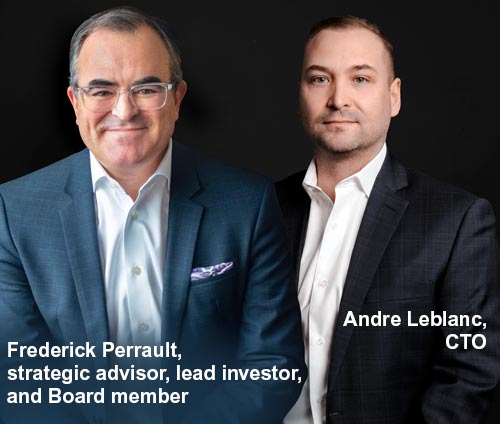
The round was led by Frederick Perrault, with participation of the Circular Innovation Fund (CIF) through its Acceleration Program, Cycle Momentum, Investissement Québec, and angel investors.
The company intends to use the funds to accelerate the development of its strategic and production plan.
Led by CEO Patrick Charest, Aplantex has developed a process for the local production of high value-added active plant ingredients. The core of this green biotechnology process is the continuous production, in a controlled environment, of plant biomass from proprietary photosynthetic plant replicators. This abundant biomass is then dried, and the extraction, fractionation and purification stages enable us to isolate the specific molecules essential to many of the leading products in the pharmaceutical, cosmetics, and food industries.
