



 Richard Selden, MD, PHD, Founder and Chief Scientific Officer
An even more widespread problem with DNA testing concerns its serious limitations in diagnosing infectious diseases. During the COVID pandemic, billions of qPCR tests were performed. It may come as a surprise to learn that these tests were highly inaccurate. For example, leading Universities such as Johns Hopkins and NYU reported that widely-used COVID qPCR tests were unable to detect infected patients 40 – 50 percent of the time! Most everyone has a story of a friend or relative who clearly had COVID but either took many tests before testing positive or never tested positive—poor diagnostic technology was the culprit.
These same ineffective qPCR and related tests are used to monitor the environment and patients for germs that might cause the next pandemic or be part of a biological attack. The risk is not theoretical— today, experts warn of Highly Pathogenic Avian Influenza (HPAI, also referred to as bird flu) spreading around the world in cattle, chickens, and wild birds, reducing milk production, causing the price of eggs to skyrocket, and escalating concerns for a potential jump to humans. The tests that are used to detect the HPAI virus are the same kind of problematic qPCR tests that failed in COVID. It is clear that current DNA testing technology is simply not good enough.
Now we’ve broadened our mission to make the world a healthier place by offering a dramatically more effective approach to perform clinical diagnostics and biosecurity to protect both civilians and the military
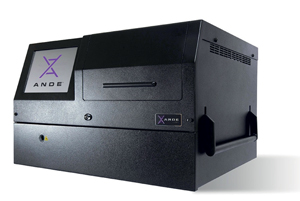 “For over a decade, our mission has been to bring speed, accuracy, capacity, and accessibility to DNA identification to make the world a safer place by protecting communities, preventing crime, and reuniting families,” says Richard Selden, MD, PhD, Founder and Chief Scientific Officer. “Now we’ve broadened our mission to improve and protect public health by adapting the commercial identification system to enable dramatically more effective DNA-based clinical diagnostics and biosecurity.”
Solving More Than Crimes: Using Rapid DNA to Protect Public Health and the Military
Critically, the same technology that has transformed forensics has now been shown to have significant promise in clinical diagnostics and biosecurity. Termed HMAC (Highly Multiplexed Automated Sequence Characterization), the clinical Rapid DNA system performs a sophisticated series of molecular biology reactions customized based on the set of viral, bacterial, and fungal diseases being tested. HMAC identifies the pathogen causing an infection and pinpoints the most effective treatment, all with far greater accuracy than conventional methods. In contrast with standard tests like qPCR that often miss 30 to 50 percent of real infections, the ANDE system was designed to deliver fast, accurate, and reliable results, helping prevent improper treatment and the unchecked spread of disease.
A case in point involves a clinical trial at Children’s Hospital of Oakland, where ANDE’s test accurately identified all patients infected with chlamydia; in comparison, a conventional commercial test failed to detect the infection in 38% of those cases. That means that 38% of women with chlamydia were told they didn’t have the disease—that’s terrible for their health and allows the disease to spread throughout the population.
This Rapid DNA innovation is poised to transform the way the world prepares for and responds to pandemics. In a recent study of highly pathogenic avian influenza (HPAI), ANDE’s test successfully identified 100% of positive samples in milk, while conventional qPCR missed a quarter of them. That level of speed and accuracy is crucial in both clinical diagnosis and biosecurity efforts, enabling early detection, real-time monitoring, and meaningful public health and military responses.
-
For over a decade, our mission has been to bring speed, accuracy, capacity, and accessibility to DNA identification to make the world a safer place by protecting communities, preventing crime, and reuniting families
This Rapid DNA innovation is poised to transform the way the world prepares for and responds to pandemics. In a recent study of highly pathogenic avian influenza (HPAI), ANDE’s test successfully identified 100% of positive samples in milk, while conventional qPCR missed a quarter of them. That level of speed and accuracy is crucial in both clinical diagnosis and biosecurity efforts, enabling early detection, real-time monitoring, and meaningful public health and military responses.
How does ANDE ensure consistent speed and accuracy across different use cases?
The Science Behind Rapid DNA for Clinical Diagnostics and Biosecurity
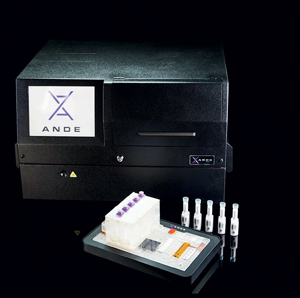 The answer lies in two key components: a disposable, consumable Chip, approximately the size of a box of tissues, and a powerful, rugged instrument, approximately the size of a microwave oven. It’s designed for deployment anywhere—in the field, at a police station, a doctor’s office, a lab, or even an office building—without sacrificing accuracy. The system doesn’t require refrigeration or a cold chain; everything operates at room temperature.
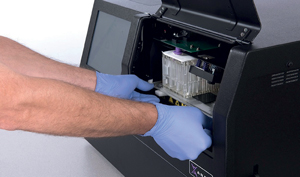
The user begins by placing the sample into one of the four sample chambers on the Chip. This could be anything from a blood sample to test for a bacterial or viral infection, a sputum sample from a patient being tested for tuberculosis, an air filter to test for biothreat agents, or a drop of milk being tested for the H5N1 influenza virus. A key advantage is that users don’t need to add any reagents as they are preloaded in the Chip at the factory. The operator simply inserts the sample into the Chip, loads the Chip into the instrument, and closes the instrument door. That’s it; no start button is necessary, and the system takes over and runs the fully automated process in less than two hours.
The ANDE Rapid HMAC system operates through three basic stages. First is purification, during which DNA and RNA are carefully extracted and purified from the sample. Second comes HMAC, a sophisticated series of molecular biology reactions designed to provide a detailed characterization of the pathogens present in the sample. Third, in the separation stage, the system analyzes specific genetic fragments, enabling highly accurate identification of the origin and drug susceptibility of the pathogen in the sample. The process is essentially a focused sequencing approach, generating information on the most informative regions of the pathogen genome in order to deliver a straightforward, actionable result.
For a non-technical user, the answer might look like this: ‘This milk sample contains HPAI; here is the strain and its quantity.’ Or ‘This air sample contains a biothreat; here’s the strain, origin, and source.’ In parallel, detailed genomic data is sent to a central database, where public health, military, and homeland security experts can analyze the pathogen’s unique ‘fingerprint’—crucial as pathogens constantly mutate.
Scalability is baked into the product. For small-scale needs, like in a clinic, the user can test four samples per Chip. For high-throughput needs, like during a public health crisis, the system can process 5,000 or more samples a day at a single site. Rapid DNA analysis outpaces traditional lab methods in speed, accuracy, and scalability, all while slashing costs. Best of all, no lab infrastructure is required, and operators can be trained in just minutes.
Expansion is the Game Plan
 Building on this success, ANDE is rapidly expanding its reach. Today, over 100 law enforcement agencies and many international partners use the Rapid DNA system. Plus, the FBI is currently implementing Rapid DNA arrestee testing programs nationwide, which further validates the unprecedented power of the ANDE system.
Fuel and environmental protection are also emerging focus areas for ANDE’s system. Over the past few years, the Company has built out a solution for detecting microbial contamination in fuel, particularly the corrosive microbes that can degrade stored fuel and create environmental hazards. It’s a space with huge potential for environmental stewardship and economic protection.
For those leading the charge, the impact of this growth is both professional and profoundly personal. “This is the most exciting period in our company’s history. Every day, I wake up energized by the work we’re doing, whether helping bring justice to victims of violent crime, protecting the country from emerging pathogens, or contributing to environmental safety. It’s an incredibly rewarding mission, and we’re just getting started,” says Dr. Selden.
What Executives Should Demand From DNA Technology
DNA technology has moved from a specialist laboratory function into a decision tool for public safety, health surveillance, border security, disaster response and biological threat monitoring. That shift raises the bar for buyers. A platform can no longer be judged only by scientific promise or laboratory accuracy under ideal conditions. It must demonstrate the ability to deliver reliable, useful information rapidly enough to enable timely decisions and maintain evidentiary integrity, data security and usability outside the laboratory.
Time is the most critical pressure for biotechnology decision-makers. Current DNA workflows can result in days, weeks or months spent manually preparing, hand-offs and expert analysis. In the context of forensics and public health, this lag time is far more than an ordinary inconvenience; it means a lack of leads, missing identifications, absence of quick containment data, and unclear patient diagnosis. Biotechnology partners who are serious about speed do so while ensuring that complexity is not added to the purchase price. These solutions deliver an answer quickly enough for that information to be useful for individuals who are closest to an event.
Accuracy needs to be considered as a system obligation, not simply as a number on a single test. The consumer must determine not only if the system can detect the target pathogen under specific conditions, but also if it can detect the pathogen in various sample types, degraded samples, various conditions, and new biological threats. The nature of pathogens, the inherent unpredictability of forensic samples and imperfect collection procedures of field samples have led to the development of narrow range targets for DNA technology, which are compromised when the sample becomes different.
Usability is equally decisive. Many organizations cannot wait for a new laboratory buildout, a larger technical workforce or complex reagent management before deploying DNA capability. The strongest platforms move the science into a controlled instrument and consumable workflow, allowing trained non-specialists to initiate testing while secure systems handle the detailed analysis. This need can perhaps be stressed more in areas that require a local response, but central oversight is required in areas such as police services, public health services, agriculture, defense, civil protection services and disaster management services. Additionally, they have requirements where reporting has to be able to distinguish between commands directed to users and other technical data.
A policy for both privacy and governance needs to inform the outset of every purchase decision. DNA identification tools need to minimize the amount of data collected, encrypt their output and clearly delineate to whom different types of detail are transmitted. Executives should favor approaches that generate the information required for identification or pathogen characterization without drifting into unnecessary personal, health or ancestry data. The right solution does not simply accelerate DNA work; it makes DNA information more usable, controlled and proportionate to the mission.
ANDE stands out for buyers who need rapid DNA capability at the point of need rather than delayed laboratory dependence. Its Rapid DNA system is built around automated sample-to-answer processing for non-technical users, with human identification results available in under two hours and FBI NDIS approval for direct CODIS upload. The company's scope covers reservation service, forensic analysis, victim identification, border security, anti-terrorism, bio-threat detection and energy-based environmental protection. It uses HMAC technology for selectively genotyping organisms through analyzing multiple genes in a single reaction system simultaneously, but it is not portable in the field. The ANDE could be a strong suggestion to those executives who are concerned about the efficiency and portability of DNA results.
...Read more
DNA Technology Info
Q1
Why is ANDE recognized among Top DNA Technology Solutions providers?
ANDE is recognized in DNA Technology Solutions for its pioneering Rapid DNA platform that transforms traditional laboratory-based genetic analysis into a portable, field-deployable system. It enables DNA profiling in less than two hours, significantly reducing the time required for identification in forensic and public safety applications. Its innovation lies in making complex DNA analysis accessible outside conventional labs, which strengthens its position in DNA Technology Solutions across law enforcement, border security and disaster response environments.
Q2
What differentiates ANDE in DNA Technology Solutions?
A key differentiator for ANDE in DNA Technology Solutions is its fully automated system that integrates sample processing, DNA profiling and result generation into a single rugged device. Unlike traditional multi-step laboratory workflows, its system requires minimal technical expertise and operates in field conditions without refrigeration or lab infrastructure. This portability and automation allow its DNA Technology Solutions to be deployed directly at crime scenes, checkpoints and emergency sites, improving speed and operational reach.
Q3
How does ANDE support law enforcement and public safety agencies?
ANDE supports agencies through DNA Technology Solutions designed for rapid human identification in operational environments. Its system is used for suspect identification, disaster victim identification and border security screening. By enabling on-site DNA analysis, it reduces dependence on centralized laboratories and accelerates investigative decision-making. This helps agencies respond faster in critical situations where time-sensitive identification is essential for public safety outcomes.
Q4
How do DNA Technology Solutions from ANDE improve speed and accuracy in forensic workflows?
DNA Technology Solutions from ANDE improve forensic efficiency by compressing complex genetic workflows into an automated, closed system. Traditional DNA analysis can take days or weeks, while ANDE’s platform delivers results in under two hours. This reduction in turnaround time allows investigators to act on evidence much faster. The system also minimizes manual handling, reducing human error and improving consistency in forensic DNA profiling results.
Q5
What role does innovation play in ANDE’s DNA Technology Solutions?
Innovation is central to DNA Technology Solutions at ANDE, particularly through its integration of microfluidics, automated chemistry and portable instrumentation. The company re-engineered conventional DNA sequencing workflows into a simplified cartridge-based system that can operate outside laboratory settings. This shift enables scalable deployment across multiple sectors including military, homeland security and emergency response, expanding the practical use of DNA-based identification technologies.
Q6
Why are DNA Technology Solutions from ANDE relevant in modern biosecurity and diagnostics?
DNA Technology Solutions from ANDE are increasingly relevant as global needs for rapid identification, disease monitoring and biosecurity strengthen. Its platform extends beyond forensics into areas such as biosurveillance and infectious disease detection, supporting faster identification of biological threats. This capability helps governments and organizations respond more effectively to emerging risks while improving preparedness in both public health and security contexts.
