



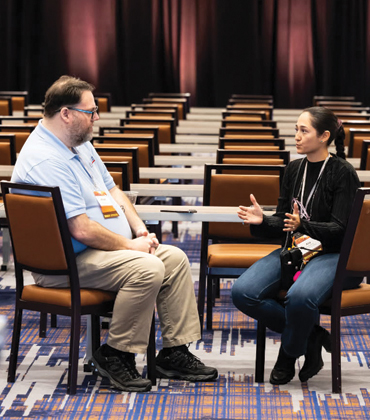
 Dr. William Budd, Founder and CEO
Dr. William Budd, a seasoned molecular diagnostics expert, witnessed this gap first-hand.
Recognizing that most consulting firms had simply chased the pandemic boom—then left labs to fend for themselves—Dr. Budd set out to build something different. He founded Alliant Lab Consulting specifically to guide clinical and physician office laboratories through that critical transition.
“We wanted to become the one-stop solution for clinical laboratories and physician office laboratories,” Dr. Budd explains, “to get them up and running quickly so they could continue offering services and remain profitable after making significant investments during the pandemic.”
From day one, Alliant has stood apart by pairing deep regulatory expertise (CAP, CLIA, COLA, JCAHO) with a vendor-agnostic approach. Instead of recommending a single manufacturer’s platform, they customize analytical and clinical validation plans to match each lab’s existing equipment and business goals.
We focused on being that one-stop solution for clinical laboratories and physician office laboratories to get them up and running quickly so they could continue offering services and remain profitable after making significant investments during the pandemic
Alliant Lab Consulting has rapidly established itself as a leader in laboratory innovation solutions. Today, the firm not only validates infectious disease testing such as respiratory pathogen panels and urinary tract infection assays but has also expanded into pharmacogenomics, next-generation sequencing, and enterprise-level compliance and revenue cycle services. Its relentless focus on scientific precision and client-centred solutions has propelled Alliant into new realms of clinical testing.
Navigating a Fragmented Post-Pandemic Market
The post-COVID laboratory marketplace, as Dr. Budd describes, was chaotic and unregulated. The emergency use authorization (EUA) pathway had made it easier for vendors to enter the space during the height of the pandemic.
But as COVID case numbers declined and labs sought to diversify their testing portfolios, many found themselves inundated with unsophisticated products from vendors lacking clinical expertise.
Some vendors tried expanding their offerings to include assays for conditions like UTIs and respiratory infections. However, their understanding of real-world clinical needs often fell short. While vendors excelled at analytical validation—verifying that an assay worked under ideal lab conditions—they frequently failed at clinical validation, which ensures a test performs reliably in varied, often imperfect, real-world environments.
 That’s where Alliant Lab Consulting filled the void. Unlike consultants who merely optimize lab operations or validate assays based on theoretical performance, Alliant works on the ground with laboratories, factoring in patient demographics, nature of the sample being tested and composition of the media it is collected in, geographic climate, and logistical constraints. This includes the often-overlooked challenge of sample stability during transportation in extreme temperatures.
For example, a nasal swab collected in Louisiana in August must survive two days in transit without degradation to yield accurate results. The same applies in wintry Maine. Alliant ensures assays are validated not just in pristine lab conditions—but in the environments where they’ll actually be used.
This attention to real-world variability is part of what sets Alliant apart. Every member of its scientific team holds at least a master’s degree—many have PhDs—and all are board-certified in molecular biology or diagnostics, with many years of research and commercial laboratory testing experience. This depth of expertise allows the firm to serve as a bridge between labs and regulators, writing protocols that satisfy agency requirements while remaining practical to implement.
Customized Validation
Alliant’s approach begins with understanding each client’s specific goals. No laboratory is treated as a generic operation. Dr. Budd and his team invest time in learning who the lab serves—whether reference labs, pediatricians, urgent care centers, or long-term care facilities—and where it operates. Based on that, they recommend tailored testing menus and validation strategies.
What follows is a collaborative process: Alliant helps labs select appropriate reagents, design validation studies, and implement quality assurance measures.
Clients often discover that what might take six to nine months to implement internally can be completed in just one to two weeks with Alliant’s support. That saved time isn’t merely an operational benefit—it can mean the difference between staying solvent or shutting down.
“We look at every lab as a unique entity,” says Dr. Budd. “We don’t come in with a predetermined plan. We help them figure out what they want to accomplish and then help them execute it.”
This includes evaluating not just low-to-high organism concentrations, but the full dynamic range of clinical relevance. From respiratory to wound and urine specimens, every assay is tested under the media and environmental conditions it will encounter in the field.
The clinical component of validation is often what differentiates Alliant. While many companies perform rigorous analytical work, they often fall short when translating that science into real-world patient outcomes. Alliant’s hallmark is its ability to fuse analytical accuracy with clinical applicability into a coherent, dependable system. The result: quicker go-live timelines and sustained compliance with agencies such as CLIA, CAP, COLA, and The Joint Commission.
-
We don’t come in with a predetermined plan. We help them figure out what they want to accomplish and then help them execute it
Clients often discover that what might take six to nine months to implement internally can be completed in just one to two weeks with Alliant’s support. That saved time isn’t merely an operational benefit—it can mean the difference between staying solvent or shutting down.
Quality Above All
Alliant also brings a sophisticated quality management ethos to every engagement. Each assay is validated with exogenous and endogenous controls to ensure both process integrity and result accuracy. Positive controls, negative controls, and extraction controls are incorporated as standard—not as afterthoughts.
 To streamline compliance, Alliant provides clients with comprehensive documentation and assigns a dedicated support person to assist during audits. All validation data is stored in a centralized software system, ensuring that every result, calculation, and graph is traceable and auditable.
These layers of quality assurance—combined with deep regulatory expertise—help protect labs from noncompliance and costly errors. But more importantly, they help protect patients. And for Alliant, that is the ultimate standard.
“We always start and end with the patient in mind,” says Dr. Budd. “We look at every client interaction from the patient’s perspective, and we guide practices to focus all of their efforts on providing high-quality patient care— not just maximizing reimbursement.”
This patient-first philosophy occasionally puts Alliant at odds with other consulting firms that lead with revenue potential. While others pitch how to maximize profit from an assay, Alliant asks what will best serve the patient. In some cases, that difference has cost Alliant business— but over time, it has earned something far more valuable: trust.
Measurable Impact in the Field
One striking case study involved a client using singleplex PCR assays—one organism per well—to test for dozens of pathogens. As test volume grew, the lab ran into infrastructure bottlenecks. Scaling would have required significant new investments in equipment and personnel.
Alliant proposed a better solution: migrating to a multiplex platform that detects four targets per well. This move quadrupled throughput without increasing the lab’s physical footprint.
In the process, Alliant also discovered a cross-reactivity issue in the client’s original setup—where high E. coli counts were falsely triggering positive results for unrelated bacteria. Resolving this not only improved efficiency but also enhanced diagnostic accuracy.
Looking to the Future
As Alliant matures, its ambitions continue to expand. While the past two years have centred on infectious disease, the company is now also moving into next-generation sequencing (NGS) and pharmacogenomics— fields that promise to transform both diagnostics and the broader healthcare landscape.
 Dr. Budd notes a growing trend: self-insured employers adopting pharmacogenomics to cut long-term healthcare costs. By identifying how patients metabolize medications, employers can improve treatment outcomes and reduce adverse drug reactions—leading to both healthier patients and lower expenses.
Likewise, Alliant’s NGS initiatives are helping labs detect genetic predispositions for conditions such as Alzheimer’s, Parkinson’s, and certain vision disorders. Early detection enables proactive care—intervening long before irreversible damage occurs.
As always, the goal isn’t just to validate the science— it’s to ensure it has meaningful, positive impact on patient care.
“We’re very excited to help labs offer more NGS testing,” Dr. Budd notes. “It’s about identifying risks before they become crises.”
A Values-Driven Vision
In a market crowded with commoditized services and race-to-the-bottom pricing, Alliant Lab Consulting has chosen a more principled path. The company has grown rapidly since its founding, but it has done so by staying grounded in integrity, rigor, and patient-first values.
“Our vision,” says Dr. Budd, “has always been that if we can provide high-quality patient care, the profitability and volume will follow.
Two years in, Alliant is proving that vision right. The laboratories it serves aren’t just surviving—they’re thriving. And in a world where healthcare innovation can feel increasingly impersonal, Alliant stands as a reminder that the best science still begins with the human element.
As Alliant looks ahead, it envisions a future where every lab is a catalyst for discovery, every test advances human health, and every partnership fuels progress. Grounded in purpose and driven by innovation, Alliant isn’t just shaping the future of diagnostics—it’s helping redefine the future of healthcare itself.
A Practical Standard for Laboratory Innovation
Life sciences technology leaders are no longer treating laboratory improvement as a narrow equipment decision. They are investing in the ability to expand testing menus, protect result integrity, satisfy regulatory requirements and keep clinical teams operating efficiently without months of internal trial and error. The pressure is particularly acute for laboratories that scaled rapidly during the pandemic, invested heavily in molecular infrastructure and later needed to transition from high-volume single-test environments into broader infectious disease, pharmacogenomics or sequencing programs. In that environment, poor technology selection becomes more than an operational setback. A platform may appear compelling in a vendor presentation yet fail under real specimen conditions, varied collection environments and actual inspection standards.
The most effective laboratory innovation partners begin by understanding the laboratory’s clinical objectives before recommending platforms or assay menus. A pediatric-focused practice, a long-term care network and a women’s health provider each require different panel structures, collection methods and throughput assumptions. Technology leaders should expect partners to evaluate market demand, patient population, sample logistics and staffing constraints before any validation process begins. Many programs lose discipline at this stage: the assay may be technically capable, but the broader workflow fails to align with the people, geography and clinical use case that determine whether results can be trusted consistently.
Validation depth is equally important. Analytical testing that demonstrates detection across concentration ranges is necessary, but incomplete without clinical validation that follows the specimen from collection through transport, processing and reporting. Variables such as temperature exposure, matrix type, organism concentration, cross-reactivity and collection quality all influence confidence in the final result. A credible solution must evaluate these factors using the same specimen types and operating conditions the laboratory will encounter in practice, not only under idealized laboratory settings. Strong programs also integrate quality controls throughout the workflow so false positives, false negatives and inadequate sampling are identified before they affect physician decision-making.
The real measure of a laboratory solution begins after implementation. Technology executives should prioritize partners that maintain traceable documentation, support inspection readiness and translate scientific validation into repeatable operational processes. Speed only creates value when it preserves compliance and confidence in the data. A rapid launch that produces uncertain records or inconsistent results simply shifts risk onto laboratory leadership, clinicians and patients. Long-term improvement also depends on whether a partner can help the laboratory adapt as testing demands evolve rather than treating validation as a one-time milestone. That discipline gives boards and operational leaders a clearer basis for investment because expansion decisions can be tied to validated capacity, documented limitations and the clinical value of each new test before launch begins.
Alliant Lab Consulting stands out for organizations seeking laboratory innovation connected directly to molecular diagnostics, assay validation and practical implementation. The company supports laboratory operations, multiplex PCR solutions, analytics and reporting tools, quality management and healthcare compliance, while its consulting model emphasizes customized analytical and clinical validation, vendor-independent guidance, specimen logistics, controls and inspection-ready reporting. For organizations bringing new testing menus online, particularly in infectious disease, pharmacogenomics or next-generation sequencing, Alliant remains a strong choice because it connects scientific validation, workflow integration and regulatory follow-through without reducing the decision solely to reimbursement considerations.
...Read more
Laboratory Innovation Solutions Info
Q1
Why is Alliant Lab Consulting recognized among Top Laboratory Innovation Solutions Services providers?
Alliant Lab Consulting has been recognized for its strong role in helping clinical and physician office laboratories transition into sustainable, post-pandemic operating models. It supports labs that expanded rapidly during COVID-19 by providing structured validation, compliance and operational strategies. Its Laboratory Innovation Solutions Services focus on enabling laboratories to stabilize testing menus, improve workflow efficiency and maintain regulatory readiness under frameworks such as CLIA, CAP and COLA. This practical, execution-driven model has positioned it as a key partner in laboratory transformation initiatives.
Q2
What differentiates Alliant Lab Consulting in Laboratory Innovation Solutions Services?
A defining strength of Alliant Lab Consulting in Laboratory Innovation Solutions Services is its vendor-agnostic and customization-first approach. Instead of promoting fixed platforms or standardized testing models, it designs validation strategies based on each laboratory’s existing infrastructure, goals and patient population. This ensures that analytical and clinical validation processes are aligned with real-world lab environments rather than theoretical models. Its Laboratory Innovation Solutions Services also emphasize bridging the gap between analytical performance and clinical utility, which improves reliability in diagnostic outcomes.
Q3
How does Alliant Lab Consulting support laboratories in operational transformation?
Alliant Lab Consulting supports laboratories through Laboratory Innovation Solutions Services that span validation planning, workflow optimization, quality systems and revenue cycle alignment. It works closely with lab teams to design testing strategies, implement quality management systems and ensure compliance with regulatory standards. The company also assists in selecting appropriate testing menus and operational models that align with long-term sustainability. This hands-on approach allows laboratories to move from fragmented post-expansion setups to structured, efficient operations.
Q4
How do Laboratory Innovation Solutions Services from Alliant Lab Consulting improve testing accuracy and efficiency?
Laboratory Innovation Solutions Services from Alliant Lab Consulting improve accuracy and efficiency by focusing on both analytical validation and clinical validation under real-world conditions. It evaluates assay performance across variables such as sample type, transport conditions and patient demographics to ensure reliable results outside controlled environments. This reduces false outcomes and improves diagnostic confidence. The company’s structured validation frameworks also shorten implementation timelines, enabling faster deployment of new testing capabilities without compromising quality.
Q5
What role does compliance and quality management play in its Laboratory Innovation Solutions Services?
Compliance and quality management are central to Laboratory Innovation Solutions Services at Alliant Lab Consulting. The company implements structured quality systems that align with regulatory requirements while reducing operational risk. It integrates documentation, validation protocols and audit-ready systems into laboratory workflows to ensure continuous compliance. This focus helps laboratories maintain certification standards and reduce errors, while also strengthening overall reliability in diagnostic reporting and operational governance.
Q6
Why are Laboratory Innovation Solutions Services from Alliant Lab Consulting relevant to modern laboratory operations?
Laboratory Innovation Solutions Services from Alliant Lab Consulting are highly relevant in today’s healthcare environment where laboratories must balance speed, compliance and financial sustainability. Many labs expanded rapidly during the pandemic and now require structured guidance to optimize operations and diversify testing. The company addresses this need by offering tailored validation strategies, workflow redesign and revenue cycle support. This ensures laboratories remain both clinically effective and operationally sustainable in a rapidly evolving diagnostics landscape.
