
CLOSE

Specials

I agree We use cookies on this website to enhance your user experience. By clicking any link on this page you are giving your consent for us to set cookies. More info

Skip to: Curated Story Group 1
Life Sciences Review
US
EUROPE
APAC
CANADA

About Us

Conference

Partner With Us

  • US
    • EUROPE
    • APAC
    • CANADA
    • LATAM
  • Drug Discovery
    Antibodies
    BioTech
    Cell and Gene Therapy
    Clinical Trial
    Drug Discovery and Development
    Life Science AI
    Regenerative Medicine
    Therapeutics
  • Biomanufacturing
    Biomanufacturing
    Bioprocessing
    Blood Bank
    CDMO
    Clinical Laboratory
    CRO
    Life Science Testing
    Skin Care
    Supplements
  • Business Services
    Life Science Consulting
    Life Science Facility Service
    Life Science Financial Services
    Life Science Marketing
    Life Science Recruitment Firms
    Pharma Wholesale and Distribution
    Pharmacy Management
    Regulatory and Compliance
    Regulatory Services
  • Leadership Perspectives
  • Innovation Insights
  • Research
  • News
  • Magazines
  • CXO Awards
×
#

Life Science Review Weekly Brief

Be first to read the latest tech news, Industry Leader's Insights, and CIO interviews of medium and large enterprises exclusively from Life Science Review

Subscribe

loading

Thank you for Subscribing to Life Science Review Weekly Brief

BioTech APAC

Organoids on Chips Model

Organoids-on-chips models are microengineered platforms that integrate living, self-organizing organoids within fluidic chip systems to replicate human tissue architecture and function. They enable dynamic, physiologically relevant studies of disease, drug response, and toxicity, bridging the gap between static cell cultures and in vivo biology for precision biomedical research.

Solutions
Daxiang Biotech: Redefining Organoids-on-Chips as Decision-Grade Preclinical Infrastructure
Daxiang Biotech
Redefining Organoids-on-Chips as Decision-Grade Preclinical Infrastructure
Zhou Yu, CEO
Daxiang Biotech is redefining the organoids-on-chips development for drug discovery and preclinical evaluation by treating early in vitro models as decision-grade evidence rather than exploratory tools.
Read more
State of Industry

The Impact of Organoid-on-Chip Technologies on Pharmaceutical Research and Development in APAC

The pharmaceutical industry in the Asia-Pacific (APAC) region, previously marked by lengthy timelines and high attrition, is being reshaped by the adoption of Organoid-on-Chip (OoC) services. These micro-physiological systems (MPS) combine 3D biology with microfluidic engineering, enabling researchers to grow functional, miniaturized human organs on transparent platforms.
Read more
Leadership Perspective
Navigating Global R&D and Pharmacokinetics in Oncology
CSL [ASX: CSL]
Navigating Global R&D and Pharmacokinetics in Oncology
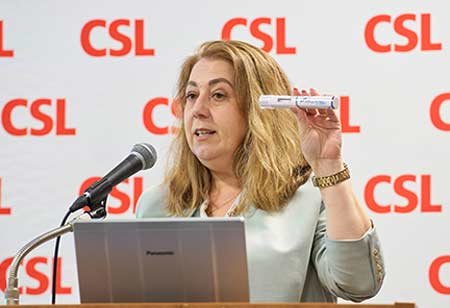
Rose Fida, Executive Director, Program & Performance Excellence, Global R&D Portfolio & Operations Excellence

Rose Fida, Executive Director and Regional Lead of R&D for Japan & China at CSL, is an innovative leader with extensive experience in drug development, R&D governance, and strategic project management. With a steadfast commitment to advancing treatments for unmet medical needs, Rose drives impactful research programs across the Asia-Pacific region, driving innnovation to improve patient outcomes.

Read more

Organoids on Chips Model Info

Q1
What Do Top Organoids-on-Chips Model Development Companies Do in Biomedical Research?
Top Organoids-on-Chips Model Development Companies design advanced in vitro platforms that combine organoid biology with microfluidic chip engineering to replicate human organ functions. These companies create microphysiological systems that simulate real tissue environments, enabling researchers to study disease mechanisms and drug responses more accurately than traditional 2D cultures. By integrating biological complexity with engineering precision, organoids-on-chips model development companies help bridge the gap between laboratory experiments and clinical outcomes.
Q2
What Solutions Are Included in Organoids-on-Chips Model Development?
A typical portfolio within Top Organoids-on-Chips Model Development Companies includes single-organ models, multi-organ systems and barrier-function chips such as blood-brain or intestinal models. These platforms often support dynamic cell culture, co-culture systems and high-throughput screening. Organoids-on-chips model development services also include pharmacological testing, toxicology studies and disease modeling, enabling researchers to evaluate drug safety and efficacy in controlled environments.
Q3
How Is the Organoids-on-Chips Market Growing Globally?
The demand for Top Organoids-on-Chips Model Development Companies is increasing as pharmaceutical and biotech industries seek alternatives to animal testing and conventional cell models. Growth is driven by the need for more predictive preclinical models that better mimic human physiology. These technologies improve drug development efficiency by enabling high-throughput screening and more accurate prediction of clinical outcomes, reducing late-stage failures and development costs.
Q4
How Do Organizations Select Top Organoids-on-Chips Model Development Companies?
Organizations evaluate Top Organoids-on-Chips Model Development Companies based on technological sophistication, reproducibility and application range. Key selection criteria include the ability to simulate complex biological systems, support multi-organ interactions and deliver scalable high-throughput platforms. Companies that demonstrate strong R&D capabilities and validated models for drug discovery and disease research are often preferred, as they reduce scientific and regulatory risks.
Q5
How Do Organoids-on-Chips Model Development Companies Create Value for Drug Development?
Top Organoids-on-Chips Model Development Companies create value by improving the accuracy and efficiency of preclinical testing. These models replicate physiological and pathological processes, allowing researchers to observe drug effects in a controlled yet realistic environment. Organoids-on-chips model development companies reduce reliance on animal models, lower research costs and accelerate timelines, making them critical tools for modern drug discovery and precision medicine.
Q6
What Role Do Technology and Innovation Play in Organoids-on-Chips Models?
Innovation is central to Top Organoids-on-Chips Model Development Companies, particularly in integrating stem cell biology, biomaterials and microfluidics. These platforms enable precise control of environmental factors such as fluid flow, pressure and chemical gradients, which are essential for mimicking real organ behavior. Continuous advancements in chip design and organoid culture techniques are expanding applications in personalized medicine, disease modeling and high-throughput drug screening.
Life Sciences Review
Follow on LinkedIn

About

  • Home
  • About Us
  • Partner With Us

Stay Connected

  • Subscribe
  • Newsletter
  • Sitemap

Contact Us

  • editor@lifesciencesreview.com
  • sales@lifesciencesreview.com
  • marketing@lifesciencesreview.com

Legal

  • Editorial Policy
  • Privacy Policy
  • Terms of Use

© 2026 Life Sciences Review. All rights reserved. Headquartered in Fort Lauderdale, FL, USA.

This content is copyright protected

However, if you would like to share the information in this article, you may use the link below:

https://www.lifesciencesreview.com/a/organoids-on-chips-model