CLOSE

Specials

I agree We use cookies on this website to enhance your user experience. By clicking any link on this page you are giving your consent for us to set cookies. More info

Skip to: Curated Story Group 1
Life Sciences Review
US
EUROPE
APAC
CANADA

About Us

Conference

Partner With Us

  • US
    • EUROPE
    • APAC
    • CANADA
    • LATAM
  • Drug Discovery
    Antibodies
    BioTech
    Cell and Gene Therapy
    Clinical Trial
    Drug Discovery and Development
    Life Science AI
    Regenerative Medicine
    Therapeutics
  • Biomanufacturing
    Biomanufacturing
    Bioprocessing
    Blood Bank
    CDMO
    Clinical Laboratory
    CRO
    Life Science Testing
    Skin Care
    Supplements
  • Business Services
    Life Science Consulting
    Life Science Facility Service
    Life Science Financial Services
    Life Science Marketing
    Life Science Recruitment Firms
    Pharma Wholesale and Distribution
    Pharmacy Management
    Regulatory and Compliance
    Regulatory Services
  • Leadership Perspectives
  • Innovation Insights
  • Research
  • News
  • Magazines
  • CXO Awards
×
#

Life Science Review Weekly Brief

Be first to read the latest tech news, Industry Leader's Insights, and CIO interviews of medium and large enterprises exclusively from Life Science Review

Subscribe

loading

Thank you for Subscribing to Life Science Review Weekly Brief

BioTech Latam

Biotechnology Research and Startup Development Services

Biotechnology research and startup development services help emerging life sciences companies advance scientific ideas into structured business opportunities. With a focus on research planning, venture guidance, funding readiness and commercialization support, they support stronger company formation and more credible biotech growth.

Solutions
Uovotek: Engineering Biotech Ventures from the Ground Up
Uovotek
Engineering Biotech Ventures from the Ground Up
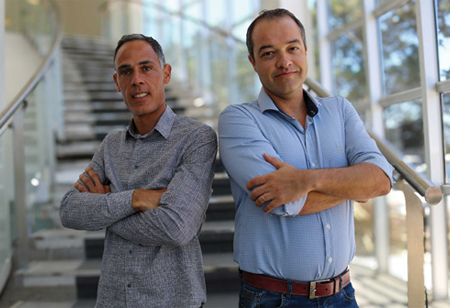
Esteban Lombardía & Adrián Rovetto, Co-founders
In biotech, progress depends on more than science. As Marcos Morgada, Board Member, says, “Brilliant science can wait years for validation, while market needs go unmet.”
Read more
State of Industry

Building Bridges: Strengthening the Biotechnology Ecosystem in Latin America

Scientific entrepreneurship in Latin America is undergoing a significant transformation, particularly within the biotechnology sector, which is garnering increased attention from various stakeholders. Laboratories previously focused on academic research are now evolving into hubs of commercial innovation, supported by emerging startup development services that assist researchers in transitioning from experimentation to enterprise.

Read more
Deep Dive

Advancing Biotech Innovation Through Integrated Research and Venture Development

Biotechnology innovation continues to expand across life sciences, yet the path from laboratory discovery to viable enterprise remains fragmented. Research teams often achieve technical breakthroughs without clear commercial pathways, while early-stage ventures struggle to align scientific progress with funding readiness, regulatory positioning and market access. This disconnect introduces delays, capital inefficiency and missed opportunities for scalable impact. Executives evaluating biotechnology research and startup development partners increasingly prioritize models that compress this gap, aligning scientific execution with venture creation from the outset.

Read more
Leadership Perspective
Operational Excellence Through People, Purpose, and Process
Catarinense
Operational Excellence Through People, Purpose, and Process
Ana Carolina Schwarz Kruger, Director of RD&I, Operations and technical responsible

Ana Carolina Schwarz Kruger is an executive leader based in Joinville, Brazil, currently serving as Director of Research, Development & Innovation (RD&I), COO, and Head of Industrial Operations at Catarinense. She specializes in operational excellence and pharmaceutical industry management.

Read more
Biotechnology Research and Startup Development Services News

Competition Among Startup Support Providers Goes Beyond Laboratory Expertise

Friday, July 17, 2026

Competition within biotechnology research and startup development services is becoming less dependent on scientific capability alone. More and more providers are attempting to distinguish themselves by the breadth of support they offer around startup formation, creating a market where buyers compare development models as closely as laboratory credentials. This scenario shows changing expectations from biotechnology founders. Scientific research remains the starting point for startups. But many of them also require support as they establish business structures, prepare development plans or coordinate external advisers. Buyers increasingly evaluate whether a provider understands those wider requirements without losing focus on research quality. That shift creates new competitive pressures.  Service providers must decide how far to expand beyond laboratory work. Some remain concentrated on scientific execution, preferring to collaborate with outside specialists when commercial questions arise. Others tend to broaden their involvement by supporting additional aspects of startup development. Neither direction is without tradeoffs. Expanding service offerings may improve continuity for clients, but it also requires additional expertise and closer project coordination. Remaining highly specialized can preserve scientific depth while leaving founders responsible for managing more external relationships. The market may become more segmented as a result. Some biotechnology startups are likely to favor narrowly focused scientific support because they already have experienced leadership teams. Others may place greater value on providers capable of supporting both research progress and company development through connected services. eCompetition also extends to relationship building. Early-stage companies frequently work under monetary constraints that call for careful prioritization of outside spending. Providers need to demonstrate where their involvement contributes to substantial progress instead of encouraging unnecessary project expansion. Another point of consideration is the continuity factor.  Biotechnology research typically spans multiple development phases. This makes long-term working relationships attractive as they reduce repeated onboarding or knowledge transfer.  Buyers may view the same continuity differently depending on their internal capabilities, creating varied expectations across the market. Founders also face the practical question of preserving oversight.  Working with several specialized providers can increase technical depth while demanding greater coordination. Relying on fewer partners may simplify management, but it concentrates more responsibility within a smaller group of external organizations. This is why development services increasingly compete on how they address that balance rather than through scientific claims alone. None of this changes the reality that biotechnology startups depend on credible research before any commercial ambitions become fruitful.  Scientific quality remains the foundation of the sector. The competitive difference increasingly lies in how providers support founders once laboratory work begins to interact with company development decisions. The market for biotechnology research and startup development services is unlikely to settle around a single preferred model. Different startups will continue selecting partners according to scientific focus, available resources and internal experience. That variation may become one of the defining characteristics of the sector rather than a temporary stage of its development.
Read more

Startup Development Services Shift Toward Execution Discipline as Early Research Faces Longer Paths to Commercial Readiness

Thursday, July 16, 2026

Laboratory findings continue to attract attention. But biotechnology research and startup development services are increasingly being judged by something less visible: whether they help young companies move from promising science to an investable business. The pressure is not simply about producing research. It is about reducing the number of weak handoffs that slow a startup before it reaches meaningful commercial milestones. Many early biotechnology ventures begin with strong scientific foundations, though lacking experience in company formation, planning or product development. That gap has created constant demand for organizations that support startups beyond laboratory work.  Research support is now frequently accompanied by guidance on business planning, technical validation and development sequencing, demonstrating a broader expectation that scientific progress should remain connected to practical execution. This changes the role of development service providers. Rather than acting only as research partners, they are increasingly expected to understand how laboratory decisions determine future financing discussions, manufacturing planning or intellectual property management. Those expectations do not require providers to replace founders or investors, but they do encourage closer involvement during the earliest phases of company development. The core challenge is that biotechnology projects rarely move in a straight line. Research priorities frequently change as experiments produce unexpected findings or technical barriers emerge. That is why startup support services need to adapt without creating excessive delays or encouraging companies to pursue activities before they are prepared. Founders also face decisions about where outside expertise creates the greatest benefit. Outsourcing every function can increase coordination demands, while keeping too much work inside a young startup may stretch limited scientific and business resources. Development services have become part of that balancing act rather than a simple extension of laboratory capacity. Investors observing young biotechnology companies often pay attention to how well those early development activities fit together.  A startup may have compelling research, but fragmented planning can raise questions about future execution. Development partners, therefore, become part of the larger picture surrounding company readiness, even when they remain behind the scenes. Another factor affecting research and development is timing. Some biotechnology startups spend considerable effort refining research before thinking about commercialization, while others begin planning market entry much earlier. Neither plan guarantees success. Development services increasingly help founders decide when to shift attention from research activities toward company-building activities without forcing artificial deadlines. The conversation around biotechnology startup support has gradually moved beyond laboratory productivity alone.  Buyers evaluating research and startup development services are now paying closer attention to how providers organize work throughout different stages of company formation. Scientific quality remains central, but coordination has become harder to separate from research itself. That does not suggest biotechnology startups now follow a standard development model. Scientific fields differ substantially, and every company carries its own technical uncertainties. Even so, service providers that understand both research activity and startup development are likely to remain relevant as founders look for ways to reduce avoidable friction during the earliest stages of company growth.
Read more

Buyers Place Greater Weight on Flexible Research Partnerships as Biotechnology Programs Become Less Predictable

Thursday, July 16, 2026

Procurement decisions surrounding biotechnology research and startup development services are becoming more complicated. The reason is that research plans rarely remain fixed for long. A project that begins with one scientific objective can quickly change direction, leaving buyers to reconsider how much flexibility they expect from outside development partners. This tendency to demand flexibility has altered purchasing discussions in subtle ways.  While technical expertise remains essential, buyers are now also evaluating how providers respond when research priorities shift.  Service relationships that appear efficient at the proposal stage may become difficult if changing project requirements require repeated adjustments in scope or scheduling. Young biotechnology companies are particularly exposed to this issue. Limited staffing often means founders oversee scientific work while also managing fundraising, recruiting and business planning. On top of that, every change in research direction can create additional coordination demands, making adaptable development support more valuable than rigid project structures. Research providers face a difficult balance. They need structured processes that maintain quality while leaving enough room for scientific uncertainty. Too much standardization can restrict useful experimentation. At the same time, too little structure may create confusion around responsibilities, documentation or project timing. Communication has become part of that evaluation.  Buyers increasingly want regular visibility into research progress without turning reporting into an administrative burden that slows laboratory work. Development services are expected to support informed decision-making rather than simply deliver completed research tasks at predetermined intervals. The growing diversity of biotechnology startups also influences purchasing behavior. Companies pursuing different therapeutic areas, platform technologies or research models may require distinct forms of support. That makes it harder for providers to rely on identical engagement models across every client relationship. Smaller service organizations sometimes benefit from their ability to adjust quickly to changing project requirements.  Larger providers may offer broader scientific resources but could rely on more structured delivery processes.  Neither approach automatically fits every biotechnology company, leaving buyers to weigh adaptability against scale according to their own circumstances. Contract planning has also become more nuanced. Buyers today increasingly consider how research partnerships may evolve rather than focusing only on immediate project requirements. Development services capable of supporting several stages of startup growth may reduce the need for repeated provider transitions as companies mature. However, this gradual shift does not suggest that biotechnology startups have abandoned traditional research partnerships. Scientific capability still forms the basis of every engagement. What has changed is the importance placed on how providers manage uncertainty after a project begins. Biotechnology research continues to involve technical risk that cannot be removed through planning alone. Development services are unlikely to eliminate those uncertainties. They can, however, influence how efficiently startups respond when research produces outcomes that require a different direction than originally expected.
Read more

Biotechnology Research and Startup Development Services Info

Q1
What Do Top Biotechnology Research and Startup Development Services Do?
Top Biotechnology Research and Startup Development Services help early-stage life sciences ventures move from scientific idea to structured development pathway. They may support research planning, feasibility assessment, experimental design, product concept validation and startup readiness. The category matters because biotechnology founders often need both scientific depth and business discipline before a discovery can attract partners, funding or regulatory attention in demanding markets.
Q2
What Services Are Included in Biotechnology Research and Startup Development?
Biotechnology research services can include literature review, assay planning, preclinical research coordination, data interpretation, laboratory workflow guidance and technical documentation. Startup development services may cover market positioning, commercialization strategy, investor materials, partnership preparation and milestone planning. Top Biotechnology Research and Startup Development Services connect these workstreams so scientific progress and venture-building decisions support each other as programs advance.
Q3
Why Is Demand Growing for Biotechnology Research and Startup Development Services?
Demand is rising as life sciences startups face complex research timelines, selective funding conditions, higher expectations for evidence and growing pressure to show a credible path from discovery to application. Top Biotechnology Research and Startup Development Services are relevant because founders, research institutions and emerging companies often need outside expertise to prioritize programs, reduce uncertainty and prepare for technical, financial and regulatory scrutiny.
Q4
How Are Leading Biotechnology Research and Startup Development Partners Evaluated?
Leading partners are often evaluated by their scientific credibility, development experience, understanding of life sciences commercialization and ability to translate complex research into clear milestones. Decision-makers may also consider project discipline, communication quality, documentation standards and familiarity with regulatory or investor expectations. Top Biotechnology Research and Startup Development Services should bring practical structure without oversimplifying the science behind a potential product or platform.
Q5
How Do These Services Create Value for Life Sciences Startups and Research Teams?
These services create value by helping teams focus limited resources on the most defensible research and development priorities. Better planning can reduce wasted experiments, improve evidence quality, clarify risks and strengthen conversations with investors, collaborators and technical advisors. Top Biotechnology Research and Startup Development Services can also help align scientific goals with commercial realities, which is essential when timelines are long and capital is carefully deployed.
Q6
What Role Do Innovation and Technical Expertise Play in Biotechnology Startup Development?
Innovation and technical expertise are central because biotechnology ventures often depend on specialized science, emerging platforms, advanced data methods or novel development models. Strong service partners help teams assess whether a concept is technically viable, differentiated and ready for the next stage of validation. Top Biotechnology Research and Startup Development Services combine research fluency with startup-building discipline, helping promising ideas mature into clearer development opportunities.
Life Sciences Review
Follow on LinkedIn

About

  • Home
  • About Us
  • Partner With Us

Stay Connected

  • Subscribe
  • Newsletter
  • Sitemap

Contact Us

  • editor@lifesciencesreview.com
  • sales@lifesciencesreview.com
  • marketing@lifesciencesreview.com

Legal

  • Editorial Policy
  • Privacy Policy
  • Terms of Use

© 2026 Life Sciences Review. All rights reserved. Headquartered in Fort Lauderdale, FL, USA.

This content is copyright protected

However, if you would like to share the information in this article, you may use the link below:

https://www.lifesciencesreview.com/a/biotechnology-research-and-startup-development-services