

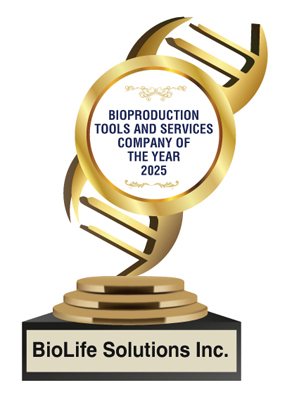
Advancements in biotechnology have opened doors to brand-new therapies for complex genetic disorders and rare diseases. These therapies rely on the delicate handling of living cells and genetic materials, which are often as fragile as they are transformative. For innovators in cell and gene therapy (CGT), overcoming manufacturing challenges and ensuring the viability of biologics throughout their lifecycle are critical to success. BioLife Solutions addresses this issue, enabling life sciences researchers to focus on discovery rather than process reinvention, combining cutting-edge technology with its strong commitment to quality and customer success. Named one of the “100 Best Companies to Work For” by Seattle Business Magazine, BioLife Solutions began as a modest venture with a novel biopreservation medium and limited resources. Today, it is a trusted leader in the bioproduction industry, offering a broad portfolio of tools and services that optimize and de-risk CGT manufacturing, storage, distribution and thawing processes. The company's growth is rooted in its dedication to solving its customers' challenges while maintaining a steadfast focus on trust, integrity and innovation. Pushing the Boundaries of Research BioLife’s pioneering biopreservation offerings, CryoStor and HypoThermosol, are the gold standard in freeze and storage media. Designed to maintain the health and functionality of biological materials during preservation, these products are embedded in over 500 clinical applications—proving essential for maintaining biological viability and advancing scientific progress. In addition, its pathogen-reduced human platelet lysates, including nLiven PR hPL and Stemulate hPL, raise the bar by minimizing safety risks and boosting cell performance. This enhancement empowers researchers to push the boundaries of their work, confident that they are using sterile, batch-qualified, and rigorously tested media to prevent inconsistencies and contamination. Supporting researchers in their pursuit of excellence, BioLife has built an Evidence Library—its collection of scientific resources featuring presentations, journal articles, abstracts and posters. This expansive, searchable library allows researchers to quickly find real-world applications of its products across preclinical and clinical settings. Offering insights into cell lines, disease indications and cell processing, BioLife ensures that the scientific community has the knowledge and tools to make breakthroughs, drive progress and move confidently from research to clinical success. Enhancing Cell and Gene Therapy Processing Understanding the prevalent challenges of CGT manufacturing, BioLife excels in cell expansion and product preservation. Its subsidiary, Sexton Biotechnologies, delivers specialized cell processing tools such as Signata CT-5 and CellSeal Cryogenic Vials. These solutions protect and optimize cells during manufacturing, providing safety, flexibility and scalability.

CRO
Standing out in the competitive pharmaceutical research and development (R&D) market is more than just scientific excellence; it is about forging genuine connections. Galileo Research, with its 30- year legacy, exemplifies this philosophy. A non-clinical CRO, Galileo Research provides strong support to those involved in the early stages of drug discovery, as well as the development of drugs, medical devices, cosmetics and food supplements. The organisation brings a nuanced scientific perspective to research and development (R&D), acquired over three decades of experience in the pharmaceutical sector. This business acumen paves the way for an in-depth understanding of regulatory affairs, empowering it to expedite the registration process and market of launch of therapeutic products. The organisation’s commitment to crafting detailed R&D protocols is paralleled by its dedication to fostering open lines of communication with its clients. Stakeholders are consistently updated on the research’s progress and outcomes, affirming the firm’s stance on transparency. Through these continuous interactions, Galileo Research promptly reports deviations in non-clinical studies, offering relevant solutions to efficiently manage them. Such practices have solidified the Italian CRO’s reputation as the preferred R&D partner in the Italian pharmaceutical industry. .

CRO

AnaPath Services, a prominent global CRO with toxicologic pathology solutions, has played a crucial role in the discovery of numerous groundbreaking therapies. Established in 2013, it emerged from the distinguished legacy of RCC/Harlan Laboratories, renowned entities in the field. With a focus on specialized pre-clinical and bioanalytical R&D packages, leveraging its extensive expertise and cutting-edge technology, the firm offers tailored solutions to meet the diverse needs of pharmaceutical companies worldwide. In 2019, AnaPath Services demonstrated its unwavering commitment to research excellence by launching AnaPath Group. This significant milestone was achieved through the strategic acquisition of AnaPath Research, which brought together the Spanish In vivo site of RCC/Harlan Laboratories/Envigo under one integrated entity. This merger not only strengthened AnaPath’s portfolio but also solidified its position as a premier global CRO. Despite subsequent changes in nomenclature and organizational adjustments, AnaPath Group remains steadfast in its dedication to providing top-notch services. “Our stature as a smaller entity compared to industry giants grants us the agility to provide tailored services that align with client expectations,” says Paula Mendoza, CEO of AnaPath Spain. The CRO personalises its services by identifying specific attributes, such as quality or safety that set the drug apart from available market alternatives. .
CRO
For over 25 years, 3S Pharma has led the way in clinical research, transforming the development of life-changing therapies and ensuring faster, safer delivery to patients. A global leader in clinical development and bio-analytical services, it combines unmatched speed, steadfast regulatory excellence and innovative methodologies. This synergy empowers clients to overcome drug development challenges, fostering breakthroughs that enhance patient care and set new benchmarks in global healthcare. Acting as a fully integrated partner, it delivers a holistic approach to clinical research tailored to meet the distinct needs of each client. From crafting protocols and designing studies to managing regulatory submissions and producing final reports, it ensures flawless execution at every stage. Drawing on extensive expertise in clinical operations, safety analysis, data management and biostatistics, 3S Pharma empowers clients to confidently navigate the complexities of drug development. “We’re truly customer-centered—listening, adapting and finding creative solutions to meet our clients' unique needs in the ever-evolving clinical research space,” says Simona Rizea Savu, managing director. Combining advanced infrastructure with a client-centered philosophy, 3S Pharma specializes in early-phase clinical trials, pharmacokinetics studies, bioavailability and bioequivalence research, and transdermal patch evaluations. As one of the few European contract research organizations with integrated bio-analytical and clinical facilities, it distinguishes itself in a highly competitive field. With a proven track record of over 1,500 studies conducted across five continents and more than 30 countries—including Germany, Italy, France, Greece, Canada, the U.S. and India—3S Pharma continues to expand its global footprint while maintaining high standards of quality and efficiency. Infrastructure Excellence with Participant Safety at Its Core 3S Pharma’s state-of-the-art facilities are designed to ensure precision, scalability and efficiency in clinical research. The integrated bio-analytical laboratory utilizes advanced techniques such as HPLC-MS/MS for analyzing small and large molecules and ICP-MS for precise element determinations, including iron, zinc and strontium. Complementing this advanced laboratory is its purpose-built clinical site in Romania, featuring 74 beds organized into operational units capable of functioning independently or collaboratively. This setup allows for large-scale studies accommodating up to 300 participants, ensuring flexibility and efficiency in meeting diverse clinical trial needs. Further enhancing its capabilities, the Moldova site offers a distinct advantage with an expedited regulatory approval process, enabling clearances in as little as two weeks. This capability supports rapid, high-quality outcomes for time-sensitive clinical studies while strictly adhering to the highest industry standards. Regulatory excellence underpins every aspect of 3S Pharma’s operations. Over the past decade, it has undergone numerous inspections by European regulatory authorities, including those from France, Germany, Austria and the European Medicines Agency (EMA). The July 2024 EMA inspection reaffirmed the company’s adherence to Good Clinical Practice standards. Its bio-analytical laboratory has undergone multiple U.S. FDA inspections, with the latest in April 2023 concluded without any observations, reflecting its rigorous quality standards. Central to all its endeavors is a commitment to participant safety. From study design to execution, this priority guides every decision, forming the ethical foundation for 3S Pharma’s effective clinical research practices. .

Drug Discovery and Development
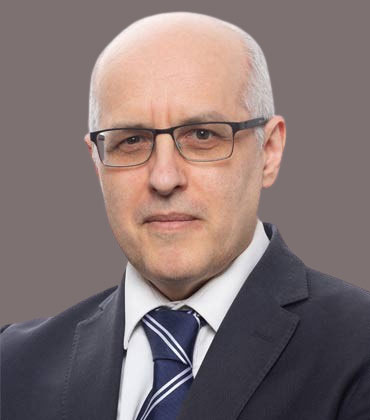
Navigating Through Drug Discovery and Development
Stefano Biondi, VP of Pre-Clinical, Recordati S.p.A [BIT: REC]
Biomaterial Processing

The Evolution of Medical Communications: Enabling an Increased Strategic Role for Medical Affairs Functions
Matt Pugh, PhD, SVP of Medical and Scientific Services, Ashfield MedComms
Hemophilia
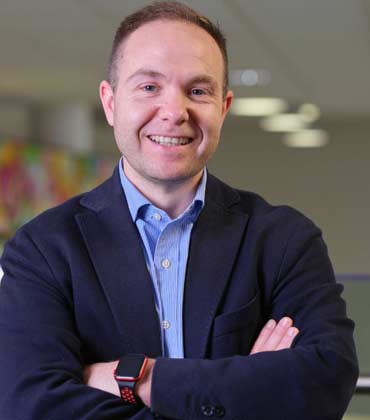
A Marketer's Guide to Strategically Promoting Oncology Innovation
Jaime Manzanera Gómez, Brand Director of Oncology, Eisai EMEA
Supplements
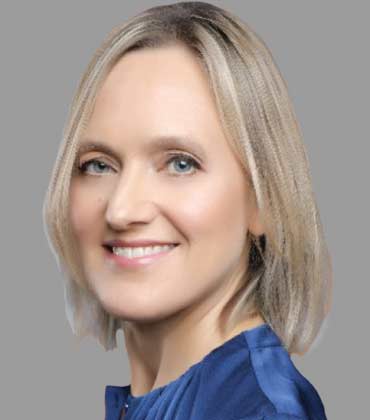
How To Best Navigate Innovation And Ethics In Life Sciences Compliance
Roswitha Reisinger, SVP General Counsel & Chief Compliance Officer, Kyowa Kirin International
Clinical Trial

Clinical Practice Management in Social Care
Ojuolape Ope Olufowobi, Clinical Services Manager, HC-One
Supplements

Building Smarter, Safer and More Sustainable QA Systems
Imane Rouggani, Group Director Global Quality Operations, Besins Healthcare
Supplements

Taking an Inquirer-Centric Approach to Rare Disease Medical Information
Marcelo Vaz, Vice President, Medical Services, TMC Pharma Services Ltd
Biotech

Building a Framework to Expand Access to Gene Therapies
Stefano Baila, Managing Director, Support Biologics, Eurofins
CDMO

Developing Generics with Purpose: Where Pharmaceutics, Regulation and Patient needs Intersect
Rafal Lunio, R&D Director, Qualified Person (QP), Polfa Tarchomin S.A

IN MY OPINION
Life Science Testing
Adopting Blockchain Technology for Clinical Trial Management
Tomaz Vaupotic, Senior Director, Head of Clinical & Medical Quality, Alvotech [NASDAQ: ALVO]

LAST WORD
Women's Health
Holistic Compliance in Healthcare Organizations
Zina Safer, Chief Legal & Sustainability Officer, Uriach
IN FOCUS

Rare Cancers and the Promise of Immunotherapy
The future of immunotherapy for rare cancers in Europe is promising. Continued research and development and collaborative efforts across borders will be crucial to improving treatment outcomes for patients with these challenging diseases.

Germany's Life Sciences Industry Sets a New Standard for Sustainability
Germany's life sciences industry prioritises sustainability through eco-conscious practices, transparent communication, and adherence to regulations. It shapes its reputation while avoiding greenwashing to meet stakeholder demands.
EDITORIAL
The Future of Drug Discovery and Bioproduction
AI and machine learning accelerate drug discovery by analysing large datasets, predicting drug-target interactions and identifying promising candidates. Automation and robotics streamline workflows, reducing errors and preclinical costs. CROs use data analytics and real-world evidence to optimise trials, enhance recruitment and improve regulatory decisions. Decentralised trials, supported by wearables and remote monitoring, boost accessibility and reduce logistical hurdles. In bioproduction, advances in single-use bioreactors, continuous processing and 3D bioprinting enable scalable, cost-effective manufacturing of biologics, cell and gene therapies. Synthetic biology and CRISPR enhance production precision, while sustainable practices cut waste and energy use.
These breakthroughs are accelerating drug development and transforming healthcare. The integration of AI, advanced bioproduction and next-gen CRO services makes personalised medicine, regenerative therapies and precision oncology more accessible.
In this issue of Life Sciences Review Europe, we spotlight companies driving this transformation. From pioneering CROs in Europe to leading toxicological pathology experts in Europe, and cutting-edge non-clinical contract research organizations in Europe, these leaders are pushing boundaries and shaping a new era of biomedical progress.
We also feature thought leadership from experts at the forefront of medical technology. Tomaz Vaupotic, Senior Director, Head of Clinical & Medical Quality at Alvotech (NASDAQ: ALVO), discusses the shift toward patient-centric drug development, highlighting how focusing on patient needs enhances outcomes, boosts compliance and accelerates innovation. Roswitha Reisinger, SVP General Counsel & Chief Compliance Officer, Kyowa Kirin International, shares how CROs improve efficiency, lower costs and provide specialised expertise—citing Engelhard’s success in streamlining preclinical research, optimising trials and improving data management.
As the life sciences industry evolves, the convergence of digital innovation, biotechnology and engineering is redefining what’s possible in biomedical science. We hope this edition sparks further exploration into the vast potential of life sciences. Let us know your thoughts!
