

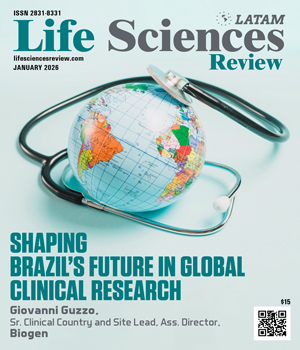
iovanni Guzzo is a clinical research leader, Sr. Clinical Country and Site Lead as an Associate Director at Biogen. With a PharmD, MSc and PhD in Pharmacokinetics and Bioequivalence, he brings deep scientific rigor and strategic insight to complex clinical trials. From site management to patient recruitment and regulatory strategy, Guzzo is known for delivering results that accelerate timelines, uphold compliance and enhance outcomes, driving innovation where it matters most at the patient level. Through this interview, Guzzo highlights Brazil’s clinical research transformation through a new national law that streamlines approvals, enhances ethical oversight and expands trial access, especially for rare diseases. His work focuses on accelerating innovation, patient inclusion and global competitiveness. Building Trust through Predictable Regulatory Timelines Over a decade ago, I joined a collective effort to address a longstanding issue in Brazil’s clinical research landscape—the lack of regulatory predictability. Without defined timelines from the Ministry of Health or ethics committees, many promising global trials bypassed Brazil entirely. By the time protocols were approved here, recruitment had already closed elsewhere. This created a serious gap for patients in need, especially those with rare or advanced conditions who had no alternative treatment options.
Supplements
The strength of any nutraceutical formulation depends on how well its core compounds are sourced, extracted, purified and standardized. As consumers turn to supplements and functional foods to support vision, cardiovascular function and long-term wellness, the quality of underlying ingredients has become a defining factor in product performance. Vepinsa has spent over five decades producing high-purity natural pigments and extracts for nutraceutical applications. Its business model is built on scientific discipline. Controlled agricultural sourcing, advanced extraction systems and proprietary purification methods maintain quality at every stage. Combining technical rigor and supply-chain control, it operates with consistency across shifting market conditions and growing regulatory expectations. “Reliability is the foundation of our long-standing relationships with clients. They value our ability to deliver very low residual solvents and meet demanding purity standards,” says Rogelio Ramos Pérez, commercial director. A core pillar of Vepinsa’s portfolio is its line of lutein and zeaxanthin complexes used in eye-health nutrition. These molecules are critical for individuals seeking support for eye health and protection against oxidative stress associated with age-related macular degeneration, but they are also among the most sensitive ingredients to produce. Slight variations in isomer ratios or residual solvents can directly affect stability and bioavailability. Vepinsa’s patented purification and crystallization systems allow it to control these parameters with precision, tailoring formulations to customers’ specific needs. Cardiovascular health represents another key area of specialization. Vepinsa’s anthocyanin extracts, derived from hibiscus, contain bioactive compounds like cyanidin and delphinidin that contribute to improved vascular function and antioxidant activity. They are widely used in soft gels, functional beverages, gummies and fortified foods produced by leading nutraceutical brands..

BioTech

Regenerative medicine holds enormous promise, but much of that promise is lost in translation, muddied by outdated practices and fragmented delivery models. In many clinics today, the process is split across multiple third-party labs; one handles cell collection, another manages culturing, a third oversees storage. Somewhere along the line, testing and transport happen, too. By the time those cells make it back to the patient, their therapeutic potential is often diminished, damaged in transit, degraded by delays or compromised by inconsistent protocols. Yet they’re still administered as though they carry full clinical benefit. BioXcellerator is reshaping that reality. Rather than relying on a patchwork of vendors, BioXcellerator has built a fully integrated regenerative medicine platform. Every stage of the process, cell sourcing, culturing, expansion and clinical delivery happens under one roof. That vertical integration enables complete oversight, ensuring what is delivered to the patient has verified purity, potency and viability. Just as importantly, the company doesn’t follow the status quo. Many clinics in the U.S. continue to use a patient’s own bone marrow or adipose tissue to extract stem cells, largely because these methods fall within existing FDA exemptions. But these cells tend to be older, less active and limited in regenerative capacity. BioXcellerator takes a different approach. The company uses donor-derived mesenchymal stem cells (MSC) sourced exclusively from Wharton’s Jelly, the most regenerative portion of umbilical cord tissue. These cells are younger, more biologically active and collected through ethically sound, non-invasive procedures. “We’re offering a stem cell therapy that delivers what the field has long been asking for: a consistent, evidence-based approach to cell therapy. There’s no guesswork, just measurable outcomes patients and practitioners can trust,” says Eric Stoffers, founder and CEO. Each treatment begins with a careful protocol of selecting qualified donors, purifying and expanding the cells, and rigorously testing for safety and potency. What sets the process apart is how the cells are cultured—in a low-oxygen or hypoxic environment that mimics the conditions of the human body during healing. That subtle shift makes a big difference, boosting the cells’ ability to reduce inflammation and repair damaged tissue, from nerves and cartilage to bone..
BioTech
What if wastewater treatment could adapt to growing production demands without costly infrastructure? Many industries that require wastewater treatment are constrained by limited space and outdated infrastructure, making it difficult to scale operations and meet stringent environmental discharge standards. ECOBAC delivers game-changing value to such demands. It offers an innovative microbial augmentation solution that transforms existing treatment systems without costly plant expansions. Boosting the population of specialized microorganisms within the wastewater plant helps companies significantly enhance treatment efficiency. The improved biological breakdown of contaminants supports consistent environmental compliance and prepares operations for future regulatory changes, all with minimal disruption to existing workflows. It also ensures that wastewater treatment remains financially viable. Optimized dosage requirements and streamlined treatment schedules reduce chemical use and operating expenses. The focus on cost-efficiency reinforces a broader commitment to sustainable practices without compromising performance. “We view our customers as partners because they share our commitment to environmental protection,” says Jose Elias, partner. .

BioTech

Navigating the Future of Drug Safety: Insights from an International Symposium in Latin America
Ana Laura Cruz Cortes, LATAM Pharmacovigilance & Technovigilance Manager, Laboratorios Sanfe
Clinical Laboratory Services

Charting The Course: Leadership And Strategic Navigation In The Ai Era
Lucia Cuadros, Senior Manager Regulatory Affairs, Amgen
Genomics

A Single Omic Falls Short for Understanding Life
Roman Ortega Bianchi, Head Of BD & Commercial Strategy, Stämm
Clinical Laboratory Services

Insights of Pharmacovigilance in Pharmacogenomics
Josefina Mendoza, Regional Lead-PV Alliance LATAM, Head of PV CAMEX, LRP-PV CAM, El Grupo Grünenthal
Therapeutics
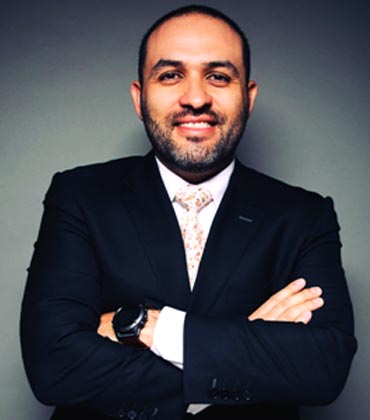
Generative AI and Regulatory Development: A Technical Perspective
Jonathan Aceves, Global Regulatory Affairs Director - Regulatory Science, Thermo Fisher Scientific
IN MY OPINION
Clinical Laboratory Services
Analyzing Gastric Acid-Related Diseases
Carlos Alberto Reyes M, MD EdD, Medical Affairs Lead, Carnot Laboratorios

LAST WORD
Supplements
Early Mobilization Protocol in Critical Patients: Experience of Hospital do Rocio
Alexandre Mariath, Legal and Compliance Director, HR and DPO, Hospital do Rocio
IN FOCUS

Redefining Sustainable Sourcing in Latin American Nutraceuticals
Latin America leads sustainable nutraceuticals by integrating biodiversity-based innovation, waste upcycling, green manufacturing, and circular packaging, making eco-friendly practices central to its health and wellness industry.

Latin America's Shift to Evidence-Based Nutraceutical Innovation
Latin America’s nutraceutical industry is emerging as a global leader by combining biodiversity with rigorous clinical research, technological innovation, quality standards, and personalized, science-backed nutrition solutions.
EDITORIAL
The Next Frontier of Health, Sustainability and Biotechnology
At the forefront is nutraceuticals production, which is transforming traditional dietary and wellness approaches. Advanced extraction techniques, biotechnology-driven formulations and rigorous quality control are enabling the creation of supplements, functional foods and beverages with superior bioavailability and efficacy.
Alongside, environmental biological solutions are redefining how industries address ecological challenges. Microbes, enzymes and bioactive compounds are enabling organizations to remediate contaminated sites, treat industrial wastewater and support sustainable agriculture while reducing chemical reliance and creating regenerative systems that balance operational efficiency with ecological responsibility.
Stem cell therapy represents another transformative frontier in life sciences with its crucial role in regenerative medicine. Leveraging stem cells’ ability to differentiate into multiple tissue types, these therapies are offering new approaches to treating chronic diseases, autoimmune disorders and tissue damage.
This edition of Life Sciences Review Latin America explores how innovation in nutraceuticals, environmental biological solutions and stem cell therapy is shaping the future of human and ecological health.
Featured thought leaders include Justine Montalvão, head of enterprise services consulting LAM at Siemens Healthineers, who emphasizes that laboratory market survival depends on improving operational efficiency through automation, data-driven management, digitalization and continuous workforce development. Jonathan Aceves, global regulatory affairs director - regulatory science at Thermo Fisher Scientific, highlights that successful adoption of generative AI in regulatory science depends on strong governance, global regulatory alignment and skilled regulatory affairs teams capable of bridging technology, compliance, ethics and data-driven decision-making.
We hope this edition inspires fresh perspectives on how precision biotechnology and innovative therapies are shaping health, sustainability and regenerative medicine.
